Hidden in Plain Sight: Priests' Hiding Holes and Our Castles That Feature Them
Step inside some of the country's most secretive corners - rooms designed to hide priests from the law, and stories of faith, courage and ingenious escape routes. Priests' hiding holes are a fascinating reminder of a turbulent period in history, and a few remarkable examples survive in our very own castles.
What Was a Priest’s Hiding Hole?
Hidden deep within the fabric of a castle, a priest’s hiding hole was a secret refuge for Catholic clergy during the late 16th and early 17th centuries. After the Reformation, when England and Scotland broke from the Roman Catholic Church, practising the faith became dangerous. Priests risked imprisonment or even execution simply for saying Mass.
These concealed spaces - hidden behind walls, beneath floors, or tucked within staircases - had to be undetectable during searches by government officials. Cramped, often airless, and sometimes used for days at a time, they demanded extraordinary endurance from those hiding within them. Today, they offer a tangible connection to the ingenuity and quiet defiance of the families who sheltered them.
Nicholas Owen: Master of Secret Hiding Places
One of the most remarkable figures in the history of priest holes was Nicholas Owen (1562-1606), a Jesuit lay brother and master craftsman. Working in complete secrecy, often alone and at great personal risk, Owen built hiding places so ingeniously concealed that even the most thorough searches often failed to find them!
His creations included hidden compartments behind panelling, trapdoors beneath floorboards, spaces above ceilings and staircases within walls. Some even incorporated escape routes leading outside the house. Owen was eventually captured following the Gunpowder Plot, tortured in the Tower of London, and died without revealing the secrets of the hiding holes he had built. Today, his surviving works stand as extraordinary feats of craftsmanship and courage.
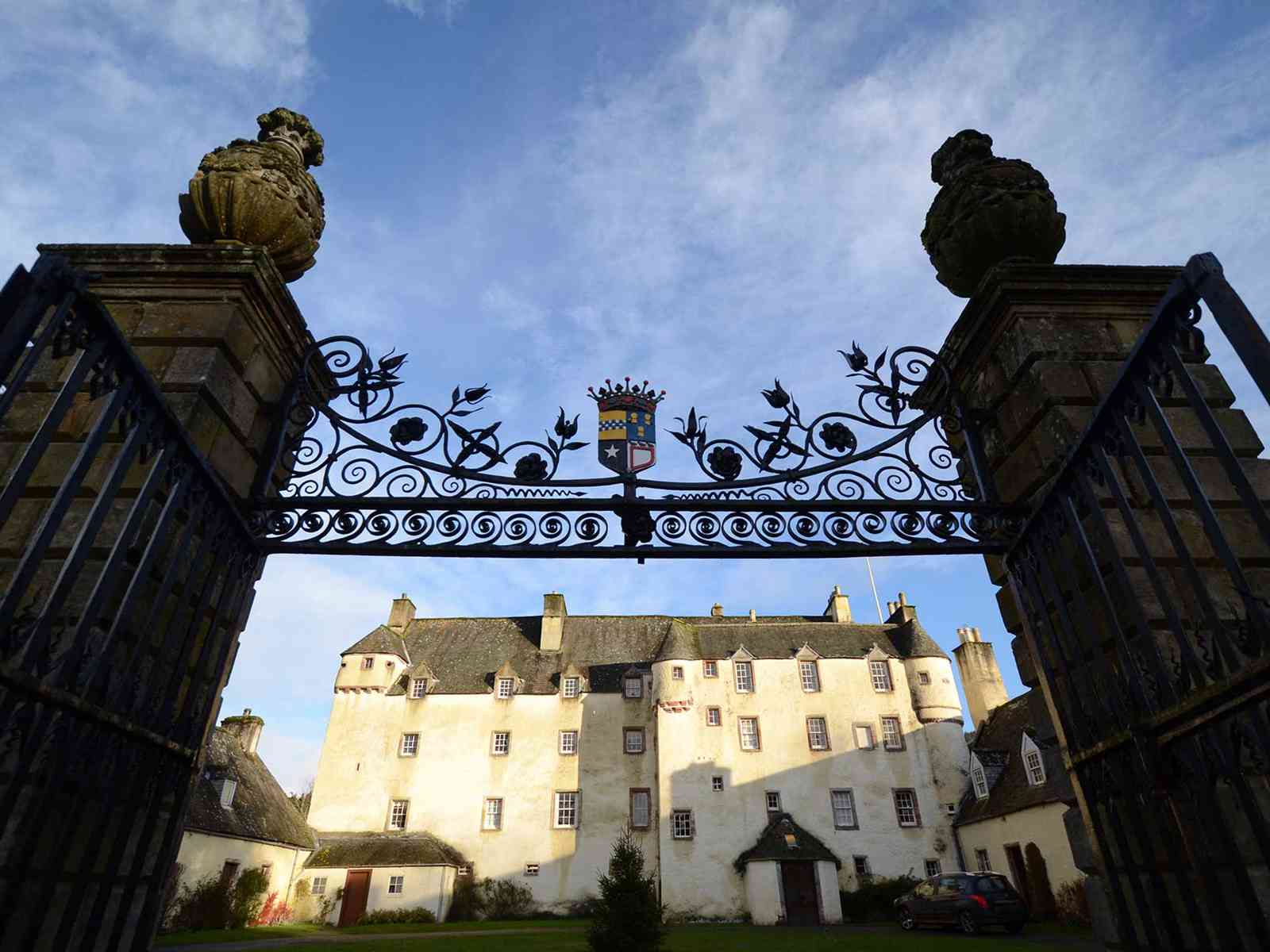
Traquair Castle: A Secret High Above
At Traquair Castle in Peebles, Scotland, a priest’s hiding hole survives on the top floor, a silent witness to centuries of secrecy. After the Scottish Reformation of 1560, Catholic worship was outlawed, and families like the Stewarts of Traquair had to practise their faith in private. For them, secrecy wasn’t just a precaution - it was a way of life.
The Catholic tradition here was championed by John, the second Earl of Traquair, and his second wife, Lady Anne Seton. A devoted Catholic, Lady Anne was determined to raise her five children in the faith despite the dangers of the time. Mass was celebrated in a small chamber on the top floor, which doubled as the priest’s living quarters.
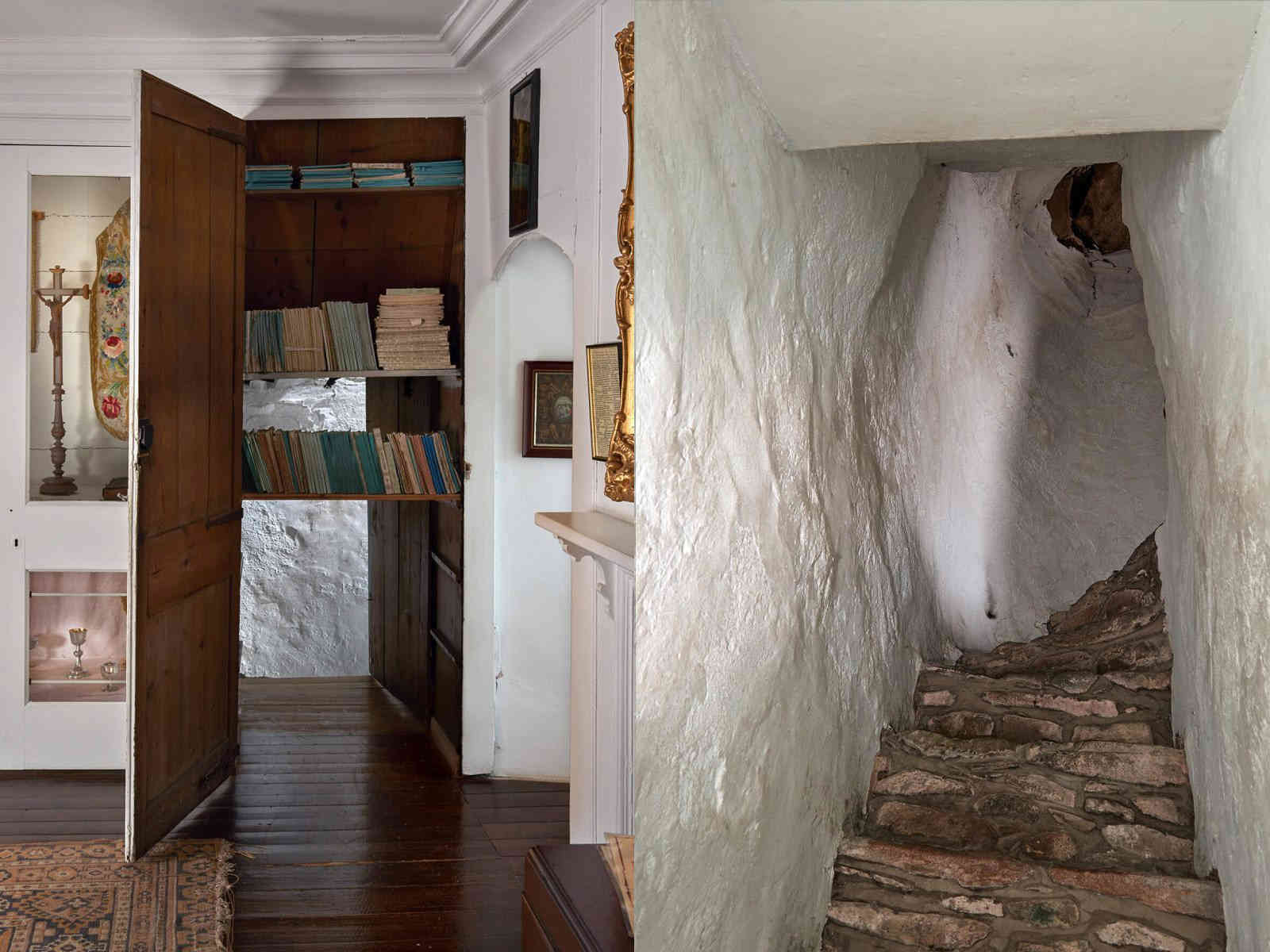
The Secret Staircase
What makes this room truly remarkable is its clever hiding place. A cupboard in the corner appears to be an ordinary bookcase, but behind its false backing is a narrow, steep staircase hidden within the walls. During a raid, the priest could slip down this secret route and cleverly escape unseen, while officials searched through the main entrance.
Castle Expert Séamy comments about his stay at Traquair;
“The priest's hiding hole stands out as one of the more eerie things I was able to see. Not only did it represent a real struggle those who used it would have faced, but seeing the cold and steep descent into the lower floors of the house made me think about all that those castle walls have seen and heard. For those who enjoy their history, this is a must-see!"
This top-floor room and its escape route were in use for centuries, right up until the Catholic Emancipation Act of 1829, which allowed Mass to be held openly. After that, a proper chapel was created in a wing of the house, where it remains today. Visiting the priest’s room is like stepping back in time - you can almost feel the tension, courage and quiet determination of the families who risked everything to keep their faith alive.
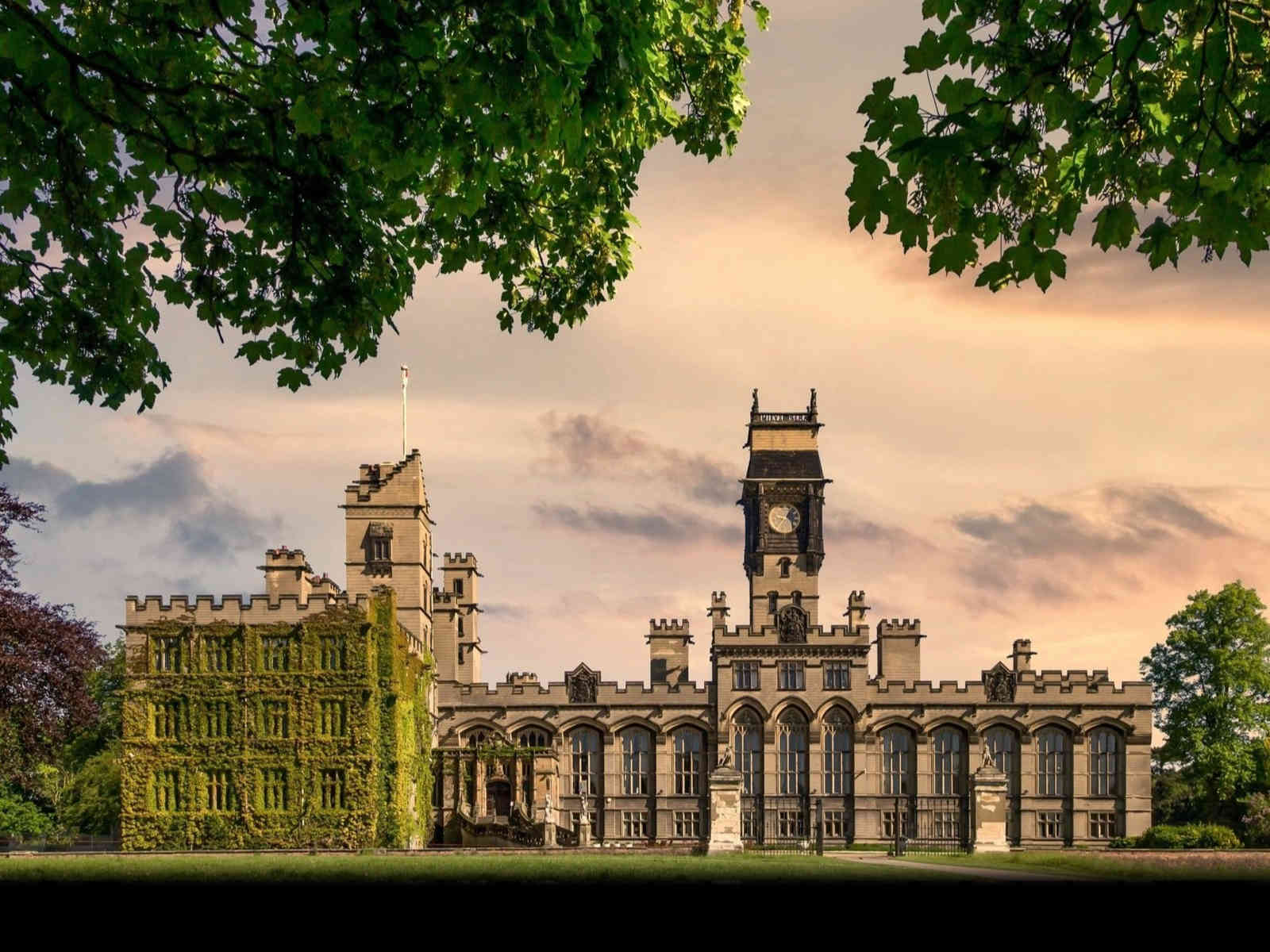
Carlton Towers: Hidden Beneath the Floorboards
While Traquair tells a story of secret worship high in the castle, Carlton Towers in Yorkshire hides its history much closer to the ground. Here, the priest’s hiding hole lies beneath the floorboards of one of the castle bedrooms, cleverly integrated into the Victorian Gothic interior.
The room itself is a classic historic-house bedroom, adorned with cascading drapes, softly toned Regency-style wallpaper, intricate plasterwork and gilded family portraits. Large windows look out over the sweeping parkland - but the real fascination lies underfoot.
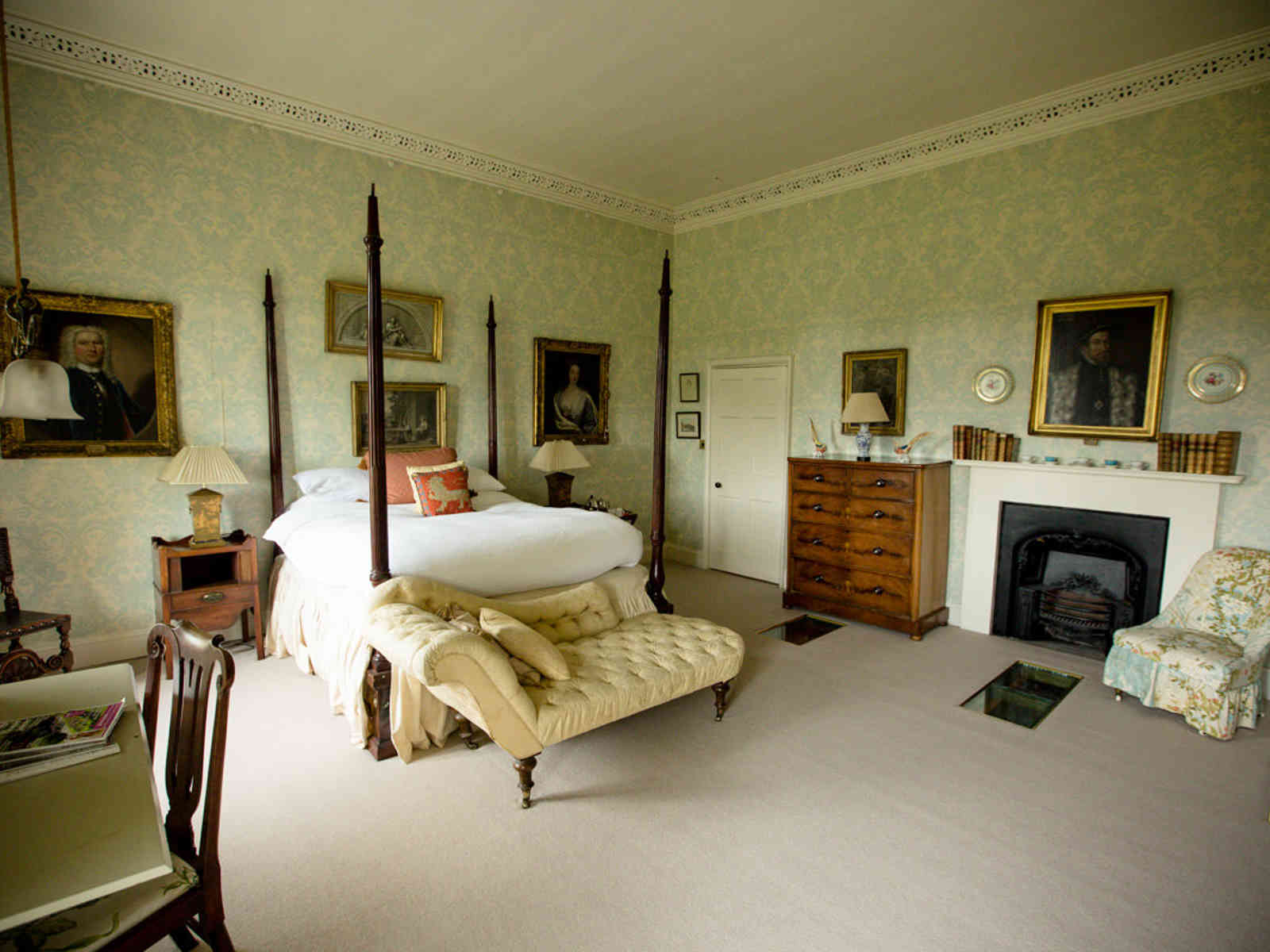
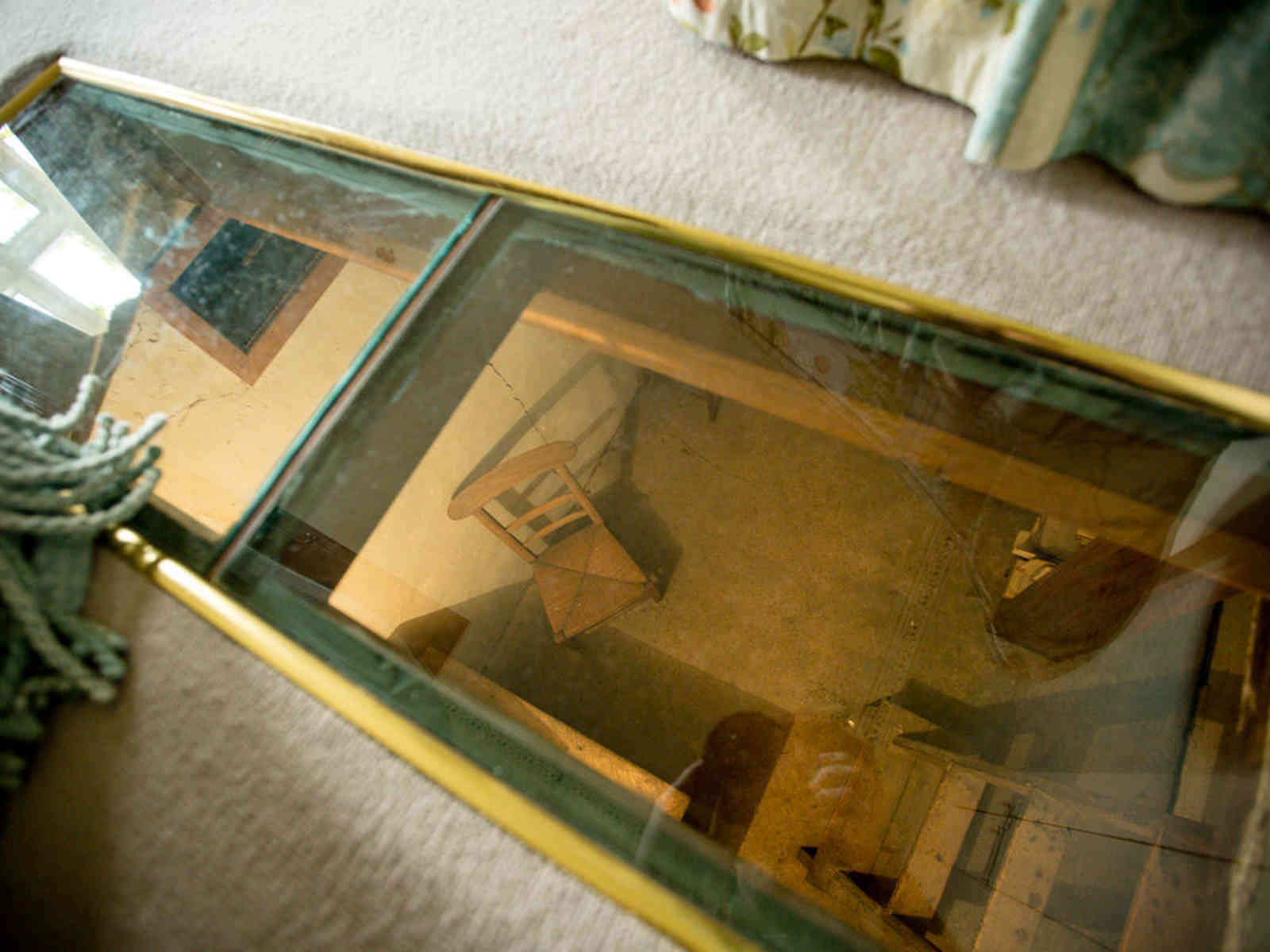
Simon at Celtic Castles, recalls his visit there:
"Despite visiting a lot of castles and historic properties over the years, my room at Carlton Towers was definitely among the more unique experiences. Glass panels in the floor allow you to peer into what was once the hidden priest hole below. The light switches in the room let you illuminate it fully - it was a little like sleeping in a museum exhibit, but in the best possible way."
Today, the space is largely bare, giving a stark impression of what it would have been like for priests hiding from the king’s forces. It was here that English Roman Catholic priest Thomas Thwing was discovered in 1680, later taken to York and executed on the Knavesmire.
A Tangible Connection to the Past
Whether high above in Traquair or beneath the floorboards at Carlton Towers, priest holes are among the most gripping remnants of Britain’s religious history. They tell a story of secret devotion, ingenious craftsmanship and the extraordinary lengths families went to protect their faith. Visiting these hidden spaces offers a unique window into a world where danger and devotion were inseparably entwined, and history was often hiding right beneath your feet.
Plan Your Castle Escape With Celtic Castles
For anyone dreaming of a castle stay, Celtic Castles offers a personal, expert service from your first search right through to booking. We showcase a handpicked collection of exclusive-use castles and castle hotels, and our passionate team provides honest, independent advice based on first-hand experience of these remarkable properties. Whether it’s uncovering secret rooms, exploring priest holes, or simply soaking up centuries of history, we aim to ensure your castle stay is seamless, immersive and memorable.
You can speak to us for free, 7-day-a-week, by video call, telephone, or email. Getting started is easy: either call us on +44 (0) 1422 323 200, or fill in our short form and we’ll get right back to you.

Author Bio
Amy has over 20 years’ experience creating copy across a range of industries and styles.
Prior to Celtic Castles, she worked for several historic homes in the north of England and Scotland, collaborating with the owners and experiencing the day-to-day running of the properties.
Amy also coordinated venue showrounds, meeting with guests planning their wedding, special celebration, filming location or corporate event. This knowledge and expertise has helped her understand people's different needs and wants in relation to a castle stay.
We're delighted Amy can bring this experience to Celtic Castles where she creates content to help guide people looking for their own unique castle experience.
Latest Related Articles
Recent content from our castle experts.
Castle Hotels in Scotland
From Highland lochs to historic cities, explore Scotland’s rich heritage.
Why Use Celtic Castles
Below is a small selection of comments from people who’ve used our service. You can also read over 1500 more.